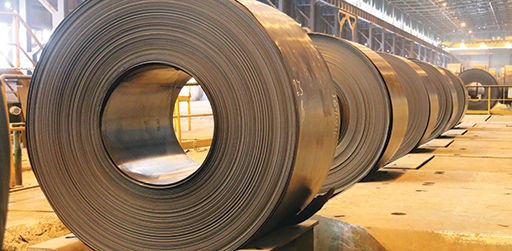
Since 2023, Mobarakeh Steel has seriously started its actions to realize green steel. Green steel is a new topic in the world of industry, and it aims to produce steel that uses resources and especially fuel in its entire life cycle (mining-transportation-production processes and its reuse with a circular approach). Minimize fossil fuels and reduce greenhouse gas emissions (CO2eq).
Green steel is examined from three perspectives: green supply chain, green processes and technologies, and the production of sustainable and environmentally friendly products.
The production of green steel was first conducted in 2021 by the Swedish company SSAB as an experiment. It seems that the global production amount in 2023 will not exceed 1.5 million tons annually.
Many of the world’s leading steelmakers have set targets for producing green steel in the medium term (by 2030) and long term (by 2050). Mobarakeh Steel Company has developed a strategic plan to achieve carbon neutrality by collaborating with various units, such as strategy and Organizational Excellence, R&D, the HSE unit, and the MSTID company. They have analyzed studies and benchmarking, emission levels, and infrastructural facilities to work toward carbon neutrality.
The 2032 vision program of MSC’s carbon neutrality has been developed based on the study’s results and the organization’s existing philosophy: a responsible company dedicated to creating a better future. This includes a 10-year medium-term goal to reduce CO2 emissions by 30% by 2032 and a long-term goal to achieve green steel and become “carbon neutral” by 2050.
MSC’s strategy to achieve the goals mentioned in the first phase, which includes a 30% reduction in CO2 emissions, involves optimizing processes, implementing a circular economy, and transitioning from a linear economy. In addition, innovation in production is an essential strategy, with plans to build a pilot hydrogen regeneration unit and continue development and commercial

ization to reach the goal of carbon neutrality.
At the beginning of the commercialization process for producing green steel using the hydrogen method, we will complete the necessary infrastructure to maximize the use of iron scrap in the production process. We will also establish a comprehensive management platform for collecting, processing, and utilizing scrap. This will include not only scraps from Mobarakeh Steel and different regions of the country but also imported scraps from other countries. Using scrap and replacing it with virgin raw materials not only reduces CO2 emissions but also cuts energy and resource consumption.
With the implementation of H2-DRI technology on an industrial and opera
Line 2: This project aims to transmit water from the Persian Gulf to the central plateau using a 2000 mm diameter pipeline. This project is currently not being pursued, but may be completed in the future if needed.
Line 3: From Sirik port in the Oman Sea (Hormozgan province) to Isfahan province, passing through Kerman and Yazd provinces.
Sofeh Water Supply and Transmission Company (IWASCO) is a consortium of several large companies and industries in Isfahan, centered on Mobarakeh Steel. The company has undertaken the construction of a water transmission line from the Oman Sea to Isfahan province. The project began in 1401 and has made significant progress due to the involvement of numerous contractors and factories producing spiral steel pipes. The speed of the project implementation is noticeable and desirable considering the amount of work completed.
The water transmission line from the Oman Sea to Isfahan Province spans 1200 km and consists of over 800 thousand tons of steel pipes, including sizes of 1600 mm and 2000 mm. Currently, nearly 400 thousand tons of the required steel pipes have been manufactured and placed. This line will initially transfer 70 million cubic meters of seawater to Isfahan, with plans to increase to 400 million cubic meters in the future stages of development.
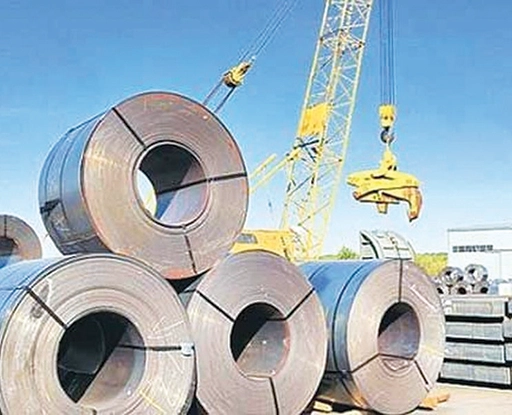
It›s important to mention that all the steel sheets used in this project are sourced from Mobarake steel products, with X65 and ST52 grades. The supply of the necessary steel sheets has been well planned to ensure the project›s continuity.
Line 4 of the East of Iran is served by the Industrial Water Supply and Transfer Company (IMWASCO), which is responsible for supplying water to industries, mines, and providing a portion of drinking water in the provinces of Sistan and Baluchistan, South Khorasan, Razavi Khorasan, and North Khorasan. The water transmission line, known as line 4, is the longest in the country, stretching 1340 km from the Sea of Oman to Mashhad. It has the capacity to transfer 230 million cubic meters of water per year. This line supplies water to important industries such as Sangan Mining Industries Company (smic).
In this project, approximately 180,000 tons of 2,200 mm steel pipes sourced from the Mobarakeh steel factory›s production sheets have been produced by spiral welding pipe companies and supplied to Imwasco company›s contractors for installation in the water transmission route. Imwasco company›s primary objective is to efficiently deliver Oman sea water to Zahedan city.
Line 5: GRP pipes are employed in water transmission line No. 5 to transfe

water from the Persian Gulf to Bushehr and Fars provinces, starting from the coasts of Lamerd and Bushehr economic zones to neighboring provinces.
In addition to the water transmission lines from the Persian Gulf and Oman Sea to the central plateau, the water transmission line from Taleghan to Tehran is also in progress. Mobarakeh Steel has provided approximately 96,000 tons of steel slabs to the pipe manufacturing companies for the construction of pipes for that project so far.